
Beat Stitch Tiles Dance Music
Endev StudioMusic
4.31.00 Reviews
- Version
- 9
- Installs
- 50.00K
- Age Rating
- Everyone
Screenshots
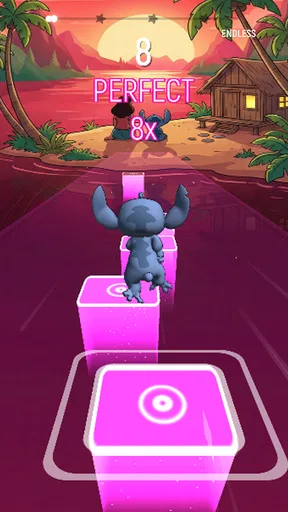
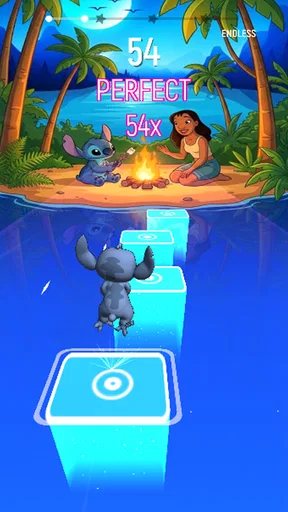
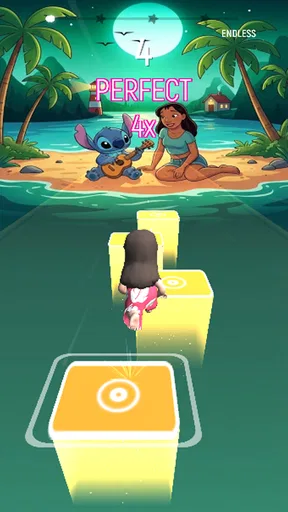
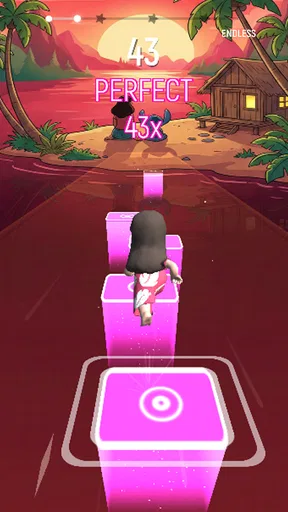
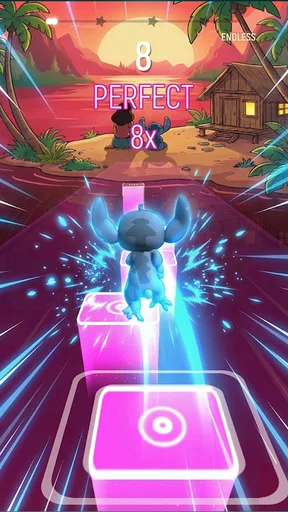

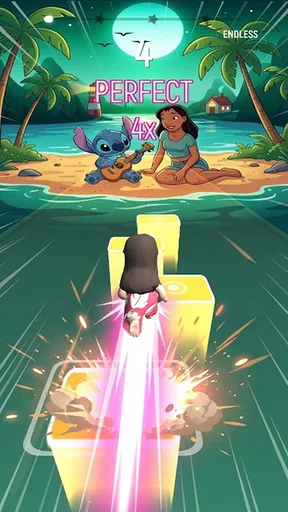
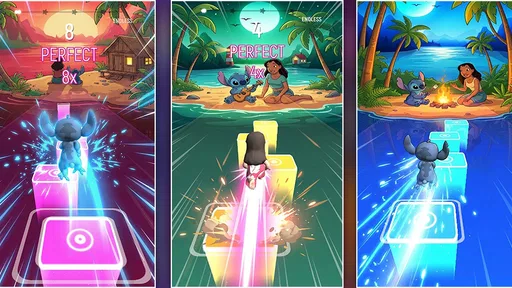
Our Review of Beat Stitch Tiles Dance Music
 Analysis by Appyee
Beat Stitch Tiles Dance Music is a free music game from Endev Studio that turns each song attempt into a quick test of timing, attention, and finger control. I approached it as a first-time player rather than expecting a deep rhythm simulator, and that made its appeal clear quite quickly: it is built around the simple pleasure of following a beat while a cute blue alien-themed presentation keeps the screen light and playful.
The game is listed for Everyone, so it is an easy recommendation for families and younger players who want something more active than a passive music app. It is also a comfortable fit for anyone who enjoys short sessions on a phone. The important thing is to understand its scale. I would not choose it as a replacement for a full rhythm game with a large competitive community, detailed music tools, or extensive customization. I would choose it when I want an immediately understandable challenge that I can pick up without studying a long tutorial.
What the first session feels like
The central idea is easy to grasp: tiles move with the music, and I need to react at the right moment. That simplicity works in the game’s favor because the first meaningful goal arrives quickly. I am not spending the opening minutes arranging a profile, learning a complicated control scheme, or navigating a dense menu. The blue alien theme gives the experience a recognizable personality, while the EDM direction supplies the energy needed for repeated attempts.
That combination also tells me who will enjoy it most. Players who like tapping games, music challenges, and bright character-driven visuals should feel at home. Someone looking for a quiet puzzle or a slow, reflective experience may find the constant rhythmic pressure less comfortable. The game asks me to stay visually alert, so it works better when I can give the screen my full attention instead of trying to play while walking, watching television, or answering messages.
Its free price makes experimenting straightforward. I can install it without treating the first session as a purchase decision, and the Everyone age guidance lowers the barrier for sharing the phone with a child. The current version is 9, and the minimum operating system is Android 7.1, which makes the technical entry point relatively accessible for people using an older compatible device. I still recommend closing unnecessary apps before playing if the phone is already struggling, because timing games are much more enjoyable when touch response feels immediate.
The public response is encouraging without suggesting that the game is universally loved. It holds a 4.3 average from around 68 ratings, with only a small number of written reviews represented. I read that as a useful sign that many early players are enjoying the basic loop, but not as proof that it will suit every rhythm-game fan. The install figure is over 50 thousand, which gives it a modest but real audience rather than making it feel like an entirely untested download.
What I would prepare before playing
My first practical recommendation is to treat the opening attempt as calibration, not as a final judgment. Rhythm games can feel difficult when the player is still learning where the active area is, how quickly the tiles approach, and whether the visual movement matches the sound naturally. I kept my first session short and concentrated on recognizing the pattern instead of chasing a perfect result. That reduced the usual frustration of failing simply because I was looking at the wrong part of the screen.
Use a stable grip and keep the phone at a comfortable angle. A loose grip makes small taps less consistent, while holding the device too low can force the eyes to jump between the approaching tiles and the action area. I found it more useful to place the phone where both thumbs could reach naturally, even if I preferred using one finger for the first few attempts. This is a small adjustment, but it matters more in a timing game than it would in a casual word game.
I would also begin somewhere with less background noise. The visuals are important, but the beat gives me another reference point, and distractions make it harder to tell whether a missed action came from poor timing or from losing concentration. Headphones can help if the surrounding environment is busy, although I would keep the volume moderate and remain aware of what is happening around me.
There is no need to overthink the blue alien theme before starting. It is not a complicated story setup that requires background knowledge. I could simply begin, watch how the tiles move, and let the presentation establish the mood. That is useful for a first-time player because the game communicates its identity through its look and rhythm rather than asking for a long explanation.
From installation to the first real success
The clearest path for a new player is to start with one uncomplicated attempt and focus on completing a recognizable sequence. I would not make a high score the first target. A better first success is reaching a point where the taps begin to feel connected to the music instead of reacting randomly to objects on the screen. Once that happens, the game’s main appeal becomes much easier to judge.
My method is to watch the next tile while tapping the current one. Looking only at the tile under my finger makes me late because I am always responding to what has already arrived. Looking too far ahead creates a different problem: I may anticipate incorrectly. The useful middle ground is to keep my eyes slightly ahead of the active moment and allow the beat to guide the timing. This is one of those habits that feels awkward for a few attempts and then becomes natural.
When I miss, I try to identify the type of mistake rather than simply tapping faster. If I am consistently early, I relax my hand and wait for the visual or musical cue. If I am late, I shift my attention farther along the path. If I lose track after a rapid section, I stop trying to recover every action perfectly and concentrate on rejoining the rhythm. That last choice is important: panicked tapping usually creates more mistakes than the original slip.
A realistic everyday use case is a short break between tasks. I can play one attempt while waiting for a friend, taking a break from study, or sitting on public transport. The game’s format suits that kind of moment because the objective is immediately readable. However, I would avoid starting a round when I know I will be interrupted in seconds. Rhythm play depends on continuity, and an incoming conversation or sudden movement can spoil the experience more than it would in a turn-based game.
Another useful routine is to play with a deliberate stopping point. After a few failed attempts, I take a short pause instead of assuming that repetition alone will solve the problem. My hands can become tense, and tense fingers are less precise. Returning after a minute often helps more than forcing another attempt. This is especially relevant for younger players, who may interpret a missed sequence as a reason to tap harder rather than as a timing issue.
Where new players may become confused
The biggest source of confusion is the difference between seeing a tile and being ready to act on it. A player coming from an ordinary tapping game may press as soon as an object appears, but rhythm play rewards a more measured response. The blue alien styling is friendly, yet the moving elements still demand concentration. I would explain that the goal is not to touch everything instantly; it is to match the movement and beat with controlled actions.
It is also easy to blame the game for every missed tile. Before deciding that the timing feels wrong, I check whether my finger is covering part of the play area, whether I am holding the device at an awkward angle, and whether I am watching the wrong lane or region. A clean setup makes the game easier to read. If the screen is smudged or the phone is being held loosely, even a simple sequence can feel unreliable.
Another common mistake is changing technique after every miss. I prefer to give one approach several attempts before adjusting it. For example, I might use one thumb consistently, then try alternating fingers only if fatigue or reach becomes a problem. Constantly switching hands makes it difficult to learn whether the issue is timing, positioning, or control. A stable routine creates better feedback.
Players should also separate visual enjoyment from mechanical depth. The alien presentation gives the game charm, but a cute theme does not automatically mean that every session will be relaxed. The music-driven action can become demanding when the pace rises or when several decisions arrive close together. That contrast is part of the experience, not a contradiction. I enjoy the cheerful appearance, but I still need to play with the focus I would bring to another timing challenge.
For children, I would introduce the game as a coordination activity rather than a contest. The goal can be staying with the music, learning from a missed tile, and enjoying the character design. That framing helps prevent the first unsuccessful attempt from becoming discouraging. Since the content rating is Everyone, it is suitable for a broad audience, but an adult can still make the experience better by showing a calm way to retry rather than demanding immediate perfection.
How it compares with familiar music games
Compared with a basic endless-tapping game, this title has a stronger sense of musical timing. I am not merely clearing objects as quickly as possible; I am trying to make my actions feel synchronized. Compared with a full-featured rhythm game, however, it is more approachable and less intimidating. That trade-off will matter to different players in different ways.
If I want a quick game for a spare moment, the lighter structure is an advantage. I can focus on the immediate pattern without first learning a complicated system. If I want a large song library, deep progression, extensive customization, or a serious competitive environment, I would look elsewhere. Nothing about this experience replaces the long-term variety of a major rhythm platform. Its strength is the direct loop, not the promise of becoming a complete music hobby.
It also differs from passive music streaming because the player is part of the performance. I cannot simply let a song run in the background and expect the same satisfaction. The game asks for active attention, which makes a successful sequence feel more rewarding but also makes it less suitable when I only want to listen. In that sense, it sits closer to a reflex challenge with music than to a conventional audio app.
The free model is another practical difference from paid rhythm games. It makes the initial decision easy, especially for families or casual players who are unsure whether they enjoy this style. At the same time, free games often invite a more casual relationship: I can try it, keep it for short breaks, and remove it if the loop does not click without feeling that I have wasted a purchase. That flexibility suits this particular game’s pick-up-and-play identity.
Small techniques that make repeated attempts better
My first non-obvious tip is to use the music as an early-warning system rather than waiting for the tile to become the only cue. The visual movement tells me where to act, while the beat helps me estimate when. When those two signals are used together, I make fewer last-second decisions. This is particularly helpful after a mistake, because listening can help me find the rhythm again before my eyes fully recover.
Second, I keep the phone still during difficult sequences. It is tempting to move the device toward each tile, especially when playing with one hand, but that changes the visual reference and makes the next action harder to judge. A steady phone lets my finger do the moving while my eyes keep a consistent view of the pattern. This is a simple habit that improves control without requiring any special setting.
Third, I use short practice goals. Instead of saying that I must finish an entire attempt perfectly, I choose one section where I usually lose the beat and concentrate on entering it calmly. Once I can handle that transition, the rest of the round feels less mysterious. This approach turns a vague failure into a specific skill problem and makes the game more satisfying for players who dislike repeating the same mistake.
A fourth useful trade-off concerns finger choice. One finger can feel more precise because it creates a consistent rhythm, but alternating fingers may reduce fatigue and help with reach. I would start with whichever finger gives the clearest control, then change only when the layout or pace makes that approach uncomfortable. There is no benefit in copying someone else’s technique if it makes my hand tense.
Finally, I avoid judging the game during a distracted session. If I am tired, rushing, or playing with poor visibility, the result says more about my circumstances than about the design. I give it a focused attempt in a comfortable position, then decide whether the rhythm loop itself is enjoyable. That is a fairer test and a better way to decide whether it deserves a place on my phone.
Who should install it, and who should skip it?
I recommend Beat Stitch Tiles Dance Music to first-time rhythm players, children who enjoy colorful music challenges, and adults who want a free game that can be understood almost immediately. The blue alien theme adds personality without requiring a complicated narrative, and the EDM-inspired energy gives short attempts a lively feel. It is especially appealing if the idea of improving through repeated timing practice sounds satisfying rather than repetitive.
I would be more cautious if you need a broad music catalog, a demanding long-term progression system, or a game designed around deep competition. Players who prefer strategic planning, story-heavy adventures, or slow puzzles may not enjoy being judged by quick reactions. People who often play with interruptions should also consider a different category, because rhythm depends on maintaining attention from one moment to the next.
For someone unsure, the best test is simple: install it, complete a few focused attempts, and notice whether the beat makes you want to try again after a miss. If the answer is yes, the free entry point and accessible age rating make it easy to keep exploring. If the answer is no, more retries are unlikely to transform the basic style into something different.
My recommendation after spending time with it
Endev Studio has made a compact music game with a clear first step and an inviting visual identity. I like that the experience does not require specialist knowledge before I can understand the objective. The strongest part is the moment when the taps stop feeling like isolated reactions and begin to follow the music naturally. That is the meaningful success a new player should look for.
The limitations are equally clear. The simple loop may feel narrow to experienced rhythm fans, and the cheerful presentation cannot compensate if the player does not enjoy repetition or quick timing. I also think the game is best treated as a focused short-session title rather than a complete replacement for larger music-game alternatives. That is not a weakness for everyone; it is simply the boundary of what this format does well.
With a 4.3 average and more than 50 thousand installs, it has already attracted a noticeable audience while remaining approachable for newcomers. I would recommend trying it when you want an active break, a child-friendly music challenge, or a low-commitment way to practice rhythm on a compatible Android device. Its real strength is the quick route from install to first improvement: watch the pattern, listen to the beat, keep the phone steady, and let each attempt teach you something.
My final view is positive but specific. Beat Stitch Tiles Dance Music is worth installing if you want colorful, beat-focused action that gets going without a long learning curve. I would skip it only if you are searching for a deep music platform or a relaxed game that can run in the background. For everyone else, especially first-time players, it offers a friendly way to discover whether rhythm games are your kind of fun.
Verdict
Strengths of Beat Stitch Tiles Dance Music
- Simple tap-and-swipe controls are easy for beginners to learn.
- Large music library offers variety for different moods and play styles.
- Short levels make it convenient for quick gaming sessions.
- Bright visuals and rhythmic effects create an energetic atmosphere.
- Progression and challenges encourage regular play.
Limitations of Beat Stitch Tiles Dance Music
- Some tracks or features may require in-app purchases to unlock.
- Fast sections can feel difficult on smaller phone screens.
- Gameplay may become repetitive after extended sessions.
- Ads can interrupt the experience for free players.
- Requires precise timing, which may frustrate casual players.
Similar Picks in This Category
View All
Tiles Hop Music & Ball Game
AMANOTES PTE. LTD.4.3

Magic Tiles 3™ - Piano Game
AMANOTES PTE. LTD.4.6

Real Piano
Bilkon3.7

Piano Game: Classic Music Song
Dream Tiles Piano Game Studio4.0

Smash Colors: Music Ball Rush
BADSNOWBALL HONGKONG LIMITED4.2

Piano Music Go-EDM Piano Games
Joy Journey Music Games4.5
Frequently Asked Questions
What is Beat Stitch Tiles Dance Music?
Beat Stitch Tiles Dance Music is a rhythm-based mobile game where you tap moving tiles in time with songs and follow the beat to build higher scores. Its gameplay is designed to be simple to learn but increasingly demanding as the speed and note patterns become more challenging. It combines music, quick reactions, colorful visuals, and score-based progression for short, entertaining sessions.
How do you play Beat Stitch Tiles Dance Music?
The main objective is to tap the correct tiles as they reach the target area while keeping pace with the selected track. Accurate and consecutive taps usually help maintain combos and improve your score, while missed notes can interrupt your progress. I found that success depends on concentration, timing, and learning each song’s rhythm rather than simply tapping as quickly as possible.
Does Beat Stitch Tiles Dance Music require an internet connection?
The connection requirements may vary depending on the version of the app, the song being played, and features such as advertisements, updates, rankings, or downloadable content. Some gameplay may be available offline after installation, but users should not assume that every feature works without internet access. It is best to open the game online first and check which tracks and modes remain available offline.
Is Beat Stitch Tiles Dance Music free to download and play?
Beat Stitch Tiles Dance Music can generally be downloaded without an upfront charge, but free access may include advertising, optional purchases, or limitations on songs and other content. Before downloading, check the listing for the current in-app purchase information and age rating. Players who want uninterrupted sessions should also review whether the game offers a paid option to remove advertisements or unlock additional features.
Is Beat Stitch Tiles Dance Music suitable for children and casual players?
The basic controls are easy to understand, making Beat Stitch Tiles Dance Music suitable for casual players who enjoy music and quick reflex challenges. However, the faster levels may become frustrating for younger users or anyone sensitive to rapid flashing visuals and sound effects. Parents should review the store rating, privacy details, advertising, and in-app purchase settings before allowing children to play.
Play our best games!


